
- All
- Product Name
- Product Keyword
- Product Model
- Product Summary
- Product Description
- Multi Field Search

Views: 0 Author: Site Editor Publish Time: 2026-06-26 Origin: Site


Walking into a living room and sinking your toes into a plush surface feels incredible. You instantly crave a cozy, inviting atmosphere for your own home. However, navigating the world of deep-pile textiles often leads to unexpected frustration.
Fluffy Rugs offer unmatched visual warmth and tactile appeal. Sadly, they frequently fail in high-traffic living rooms due to severe matting, excessive shedding, or impossible maintenance routines. Buyers regularly realize too late they purchased the wrong material for their daily habits.
We created this objective, spec-driven evaluation guide. It will help you effectively balance aesthetic desires against everyday functional realities. Read on to learn the exact criteria needed to vet materials, pile density, and construction quality before finalizing your purchase.
Material dictates lifespan: Synthetic fibers offer stain resistance and affordability, while natural wool provides superior longevity and temperature regulation, albeit with initial shedding.
Density over pile height: A rug's durability in a living room depends more on fiber density (how closely yarns are packed) than how tall the fibers are.
Maintenance is non-negotiable: High-pile and fluffy textures require specialized vacuuming (suction-only) to prevent fiber destruction.
Sourcing matters: Buying from a professional carpet manufacturer with transparent specs reduces the risk of toxic off-gassing and premature backing failure.
The core material of any textile directly determines its performance over time. It dictates how it reacts to heavy foot traffic, accidental spills, and relentless friction from heavy living room furniture. Choosing the right fiber means understanding your household's unique lifestyle demands.
Natural fibers have served as the gold standard in floor coverings for centuries. Wool inherently possesses a coiled, spring-like microscopic structure. This unique shape allows the fibers to compress under weight and then naturally bounce back, making it exceptionally resilient and crush-resistant. Additionally, natural wool contains lanolin, a subtle oil acting as a natural liquid repellent. It is also inherently flame retardant, providing an extra layer of safety near fireplaces.
However, natural materials carry distinct risks. They demand a significantly higher upfront investment. Furthermore, new wool and traditional Greek Flokati varieties will shed aggressively during the first three to six months. You must also consider your local climate. Natural fibers absorb ambient moisture readily, making them less than ideal for damp environments or basements prone to high humidity.
Modern engineering has made synthetic fibers highly popular for household textiles. Polypropylene (often called olefin) and polyester offer remarkable stain resistance. Because manufacturers solution-dye these plastics, the color goes all the way through the fiber, resisting fading and repelling most liquid spills. Furthermore, synthetic options experience virtually zero shedding and remain highly affordable.
Despite these benefits, synthetics fall short in structural memory. They are highly prone to flattening or matting under heavy sofas and coffee tables. Once a synthetic fiber crushes, it rarely recovers its original loft. You will also face a shorter overall lifespan compared to natural alternatives, alongside the potential for static buildup during dry winter months.
Fiber Comparison Chart | ||
Feature | Natural (Wool/Flokati) | Synthetic (Polypropylene/Polyester) |
|---|---|---|
Crush Resistance | Excellent (bounces back naturally) | Poor (prone to permanent matting) |
Stain Resistance | Good (natural lanolin repels liquids) | Excellent (solution-dyed fibers block stains) |
Shedding | High (during the first 3-6 months) | None |
Price Point | Premium | Budget-Friendly |
Shopping for a plush floor covering requires looking past the initial showroom softness. To determine if it will actually survive a busy living room, you must examine the underlying structural components. True quality resides in the hidden details of construction.
High fiber density prevents premature matting. Density refers to how tightly the manufacturer packs individual yarns together into the backing. When yarns sit closely together, they physically support one another, preventing them from falling over and crushing under foot traffic.
You can easily evaluate this using the fold test. Bend a corner of the product backward on itself. If you can easily see the rigid foundation backing shining through the open spaces between the yarns, the density is simply too low for a primary living space. A high-quality piece will maintain a dense wall of fiber even when bent sharply.
Beyond density, you must evaluate the twist level of the individual yarns. Manufacturers twist synthetic and natural strands together before tufting them. Tightly twisted yarns retain their upright structure far better than loosely spun yarns. We often measure this in "turns per inch" (TPI). A higher TPI directly impacts how long comfort Fluffy Rugs maintain their luxurious, plush feel. Loosely spun yarns tend to untwist and bloom over time, leading to a matted, tangled appearance resembling an old sweater.
A textile is only as strong as its foundation. Evaluate the backing materials carefully. Natural jute offers excellent durability but can sometimes feel rough. Cotton provides a softer touch, while synthetic mesh offers great dimensional stability.
You must also consider the adhesives used to bind the layers together. Low-quality latex glues degrade rapidly, emitting strong chemical odors and causing the foundation to crumble into white dust after a few years. Choosing products manufactured by a professional carpet manufacturer ensures the use of non-toxic, high-grade adhesives. This prevents the foundation from breaking down prematurely and stops rough backing materials from aggressively scratching your delicate hardwood floors.
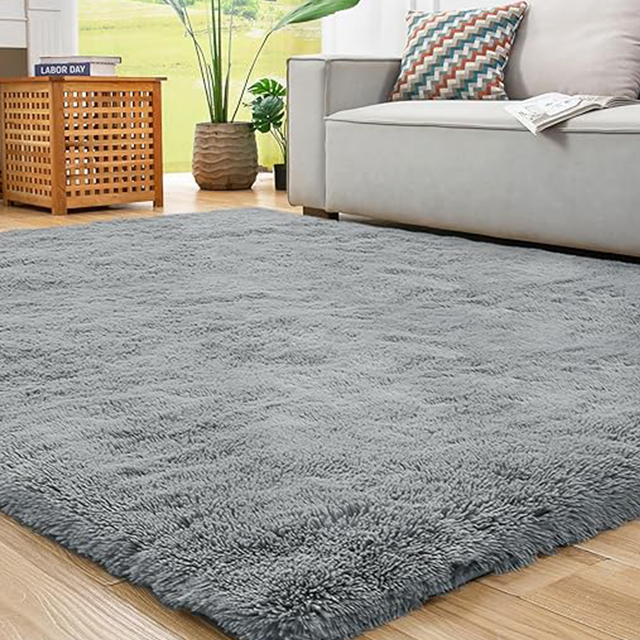
Deep-pile textiles possess significant physical volume. This thickness dramatically changes how a room functions. Incorrect sizing easily creates dangerous tripping hazards and overwhelming visual clutter. Proper placement requires strategic thinking.
Standard living room layouts typically accommodate 8x10 or 9x12 dimensions. When integrating high-pile pieces, you must decide how the furniture interacts with the thick border. The "All Legs On" approach places the entire sofa and accent chairs entirely over the surface. This unifies the seating arrangement but requires a massive footprint.
Alternatively, the "Front Legs On" framework works beautifully. Here, you place only the front 12 to 18 inches of your seating furniture over the edge. This anchors the room effectively while saving money on square footage. However, ensure heavy furniture sits level; placing only front legs on extremely thick pile might tilt your chairs backward.
Implementation risks rise significantly regarding door clearances and transition strips. Shag profiles routinely exceed one inch in height. If you place one near a swinging interior door, it will jam immediately. High-pile shag strictly requires at least 1.5 to 2 inches of vertical clearance. Always measure the gap beneath your doors before committing to a specific layout.
You can maximize lifespan by zoning your space. Place the thickest part of the textile explicitly in lounging zones—like directly under the coffee table or right in front of the sofa. Keep primary walking paths, such as the direct route from the front door to the hallway, relatively clear. Minimizing targeted, repetitive wear patterns keeps the fibers looking uniform and prevents distinct "traffic lanes" from developing.
The absolute number one reason buyers regret purchasing deep-pile textiles revolves around underestimating the cleaning protocol. These items demand a specific, careful approach to remain hygienic and beautiful.
Standard upright vacuums pose a severe threat. Motorized beater bars—the aggressively spinning brushes designed to agitate dirt—will quickly destroy shag fibers. They catch the long loops, pull them forcefully, and rip them entirely out of the backing. You absolutely must use a suction-only setting. If your machine lacks a suction-only floor head, you will need to rely heavily on a specialized smooth upholstery attachment.
Furthermore, standard robot vacuums rarely handle these environments well. Most automated cleaners will inevitably get tangled and stalled in any pile exceeding a single inch, risking damage to both the machine and your floor covering.
Accidents happen, and knowing the correct spot-cleaning mechanics proves crucial. When liquid spills occur, you must press firmly downward using clean, white paper towels. Never rub or scrub the area. Vigorous rubbing agitates the loose yarns, causing them to felt together into hard, permanent knots.
You also face significant odor-trapping risks. Deep piles act like giant air filters, capturing airborne dust mites, pollen, and pet dander deep near the foundation. Simple surface vacuuming cannot remove these trapped particulates.
Act immediately: Blot liquid spills the second they happen to prevent deep foundation soaking.
Avoid heat: Never use hot water or steam on synthetic stains, as heat sets the dye permanently.
Use enzymes: Treat biological pet stains explicitly using enzymatic cleaners to break down odor-causing proteins.
Schedule deep cleans: Commit to annual professional extraction cleaning for proper allergy management and odor neutralization.
Moving from research to purchase requires systematically narrowing down your choices. We developed an actionable framework to finalize your decision confidently. Follow these exact steps to ensure your selection genuinely fits your living room environment.
Match the pile height to your primary vacuum's capabilities. Inspect your current cleaning equipment. If you cannot disable the rotating brush roll, either factor a new suction-only canister vacuum into your budget or select a significantly shorter pile height.
Verify the specific return policy. Lighting drastically alters color perception. Furthermore, you cannot accurately judge how your family navigates the physical thickness until the item sits in your home. Ensure you have at least a 14-day window to test it within your specific lighting and traffic conditions.
Confirm the presence of a compatible rug pad. Never skip the underlayment. High-pile requires a specialized dual-surface pad (typically a felt and natural rubber blend). This pad proves absolutely essential for reliable slip-resistance. It also provides a critical buffer that extends the life of the backing by absorbing the mechanical shock of footsteps.
Taking these final precautions prevents costly return shipping fees and guarantees your new decor enhances your daily life rather than complicating it.
Successfully integrating a plush, deep-pile textile into a busy living room demands a strategic mindset. You must prioritize high fiber density and exceptional material quality over sheer, towering pile height. A dense, well-constructed piece will resist crushing and maintain its luxurious feel far longer than a sparse, overly tall alternative.
Before moving to checkout, take immediate action. Measure your exact floor space and confirm your door clearances. Check your current vacuum to ensure it features a safe, suction-only setting. Finally, if you are investing in premium natural fibers, actively request physical material swatches from the vendor to verify the color and texture firsthand.
A: Yes, they inevitably flatten over time. Synthetic materials like polypropylene prove especially vulnerable to permanent matting when placed under heavy living room furniture. We suggest regularly rotating the placement every six months and utilizing strict suction-only vacuuming to help revive and lift compressed fibers.
A: They are generally safe, but they carry distinct practical realities. Long fibers easily trap small toys, Lego pieces, and pet kibble, requiring diligent manual cleaning. Always prioritize items carrying OEKO-TEX or low-VOC certifications to ensure your children and pets avoid exposure to harmful off-gassing.
A: You can, but permanent indentations remain almost inevitable. Heavy sofa legs forcefully crush the underlying yarns against the rigid backing. We highly recommend using wide furniture coasters under all load-bearing legs to distribute the weight evenly and mitigate severe localized fiber crushing.


