
- All
- Product Name
- Product Keyword
- Product Model
- Product Summary
- Product Description
- Multi Field Search

Views: 0 Author: Site Editor Publish Time: 2026-07-20 Origin: Site


Traditional textile bath mats present ongoing challenges in moisture management. They require frequent laundering, consume excessive water and energy, and contribute to high replacement cycles in both residential and commercial environments. Prolonged moisture retention in standard fabrics leads to bacterial growth, mold proliferation, and odor accumulation. It also compromises floor safety due to reduced friction and pooling water.
Diatomaceous earth offers a material-science alternative. Processed into rigid boards or rubber-backed composite sheets, it completely changes how we handle bathroom moisture. This evaluation examines the structural properties, performance metrics, lifecycle advantages, and procurement realities of the diatom mud floor mat to determine its viability over traditional textiles.
Diatomaceous earth consists of fossilized phytoplankton. It features a naturally occurring, highly porous silica structure. Manufacturers blend raw diatomaceous earth with structural binders like quartz sand, paper pulp, or plant fibers. This blending process achieves the necessary tensile strength for daily use. Without these binders, the raw earth would simply crumble under the weight of a human foot. The manufacturing process involves pressing these mixed materials under high pressure and baking them to lock the structural matrix in place.
Optimal mats contain 60 to 70 percent diatomaceous earth. Lower percentages indicate excessive cheap fillers that reduce performance. When manufacturers use too much clay or calcium carbonate, the mat loses its porosity and fails to absorb water quickly. Higher percentages suffer from extreme brittleness and break easily during transit or under uneven weight. It is vital to distinguish between amorphous silica and crystalline silica. Amorphous silica is safe for household use. Crystalline silica poses inhalation hazards during processing or modification. Facility managers and procurement teams must always verify the silica type before approving a product for widespread use.
Microscopic pores on the sub-micron scale draw water away from the surface immediately upon contact. This capillary force drives the physics of moisture absorption. A true quick dry bath mat relies entirely on this physical structure rather than chemical coatings. When you step out of a shower, the water on your feet transfers to the mat. The millions of tiny pores act like a rigid sponge, pulling the liquid downward and spreading it laterally across the internal structure of the board.
Ambient air circulation facilitates the release of trapped moisture back into the environment. This evaporation cycle happens without added heat. It maintains room-temperature equilibrium while keeping the floor surface completely dry. The speed of this evaporation depends heavily on the ambient humidity of the bathroom. In a well-ventilated space with an exhaust fan running, a saturated mat can return to a completely dry state in under an hour. This continuous cycle of rapid absorption and passive evaporation is what separates diatomaceous earth from every other flooring accessory on the market.
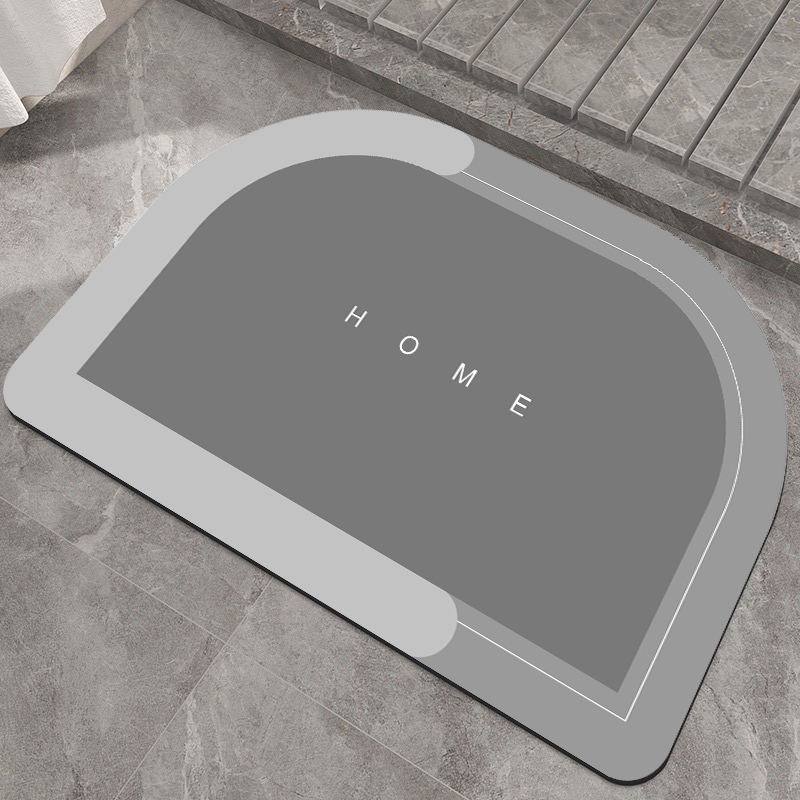
Rigid diatom boards handle moisture differently than high-GSM cotton or chenille mats. Textiles hold water until mechanically dried. Diatom boards continuously evaporate moisture. However, they have a saturation point. Under continuous, high-volume exposure like in commercial locker rooms, the board may reach its volume absorption limit. Private en-suites rarely hit this threshold. When a diatom board reaches maximum saturation, water will simply pool on the surface until the internal moisture has time to evaporate. Understanding this limit helps determine the correct application for these products.
| Performance Metric | Diatom Mud Board | High-GSM Cotton Mat | Memory Foam Mat |
|---|---|---|---|
| Surface Drying Time | 1 to 3 Minutes | 4 to 8 Hours | 6 to 12 Hours |
| Moisture Retention | Extremely Low | High | Very High |
| Maintenance Protocol | Periodic Sanding/Rinsing | Frequent Machine Washing | Machine Washing/Air Dry |
| Mold Resistance | High (Inherent physical trait) | Low (Requires chemical treatment) | Moderate (Prone to internal mildew) |
| Lifespan | 1 to 3 Years | 6 to 12 Months | 6 to 12 Months |
Rigid diatom mats have high thermal conductivity. They can feel cold to bare feet in winter compared to insulating textiles. This is a common complaint in colder climates where bathroom floors are not heated. To solve this, some users integrate under-mat heating, though this requires careful temperature management to avoid warping the board. Another solution involves transitioning to rubber-composite soft diatom mats. These provide cushioning and thermal insulation while retaining moisture control. The soft variants use a powdered form of the earth mixed into a flexible matrix, sacrificing a small amount of absorption speed for a massive gain in user comfort.
Rapid drying speed naturally inhibits mold, mildew, and bacterial colonization. Without sustained moisture, microorganisms cannot survive. This physical trait reduces volatile organic compounds and musty damp odors. Synthetic memory foam or latex-backed mats often trap these odors over time. In a commercial setting, eliminating the sour smell of damp cotton mats drastically improves the user experience. You do not need to apply harsh bleach or chemical disinfectants to a diatom board; its dry state is its primary defense mechanism against biological growth.
Surface texture requirements dictate safety. Micro-grooves and matte finishes create a reliable non slip bathroom mat. The rigid board itself provides excellent traction for wet feet. However, rigid boards still require a secondary anti-slip backing. Rubberized mesh pads prevent the board from sliding on wet tile, polished stone, or hardwood floors. Placing a hard board directly on a hard floor without this mesh creates a severe slip hazard. The mesh also serves a secondary purpose: it slightly elevates the board, allowing air to circulate underneath and preventing grit from scratching the primary floor surface.
Manufacturing a dense diatomaceous board carries an initial carbon footprint. Mining the raw material, processing it, and shipping heavy boards requires energy. However, it eliminates the lifetime energy and water costs of machine washing and drying cotton mats. Over a two-year period, the energy saved by not running a washing machine offsets the initial manufacturing footprint. Traditional synthetic mats end up in landfills where they take centuries to break down. Diatom mats are biodegradable. You can crush them and repurpose the material in garden soil to improve moisture retention. This end-of-life utility makes them a highly sustainable choice for eco-conscious facilities.
Maintenance workflows are straightforward but differ entirely from handling textiles. You cannot throw a rigid board into a washing machine. Facility managers must train cleaning staff on the correct procedures to avoid ruining the product.
When sanding, wear a basic dust mask to avoid inhaling fine amorphous silica particles. Facility managers must weigh the labor hours of periodic manual sanding against daily commercial laundry cycles. For most operations, sanding a mat once a quarter is far more efficient than washing cotton mats every single day.
Porous diatomaceous earth is highly susceptible to staining. Hair dyes, heavily pigmented cosmetics, dark bath oils, and dirty runoff can leave marks. Because the material is designed to pull liquids inward, it will pull liquid pigments deep into its structure. Immediate rinsing prevents permanent damage. Apply diluted hydrogen peroxide to lift stubborn stains from the surface. If a stain penetrates too deeply, you must sand the board down past the depth of the stain. In environments where hair dye is frequently used, soft composite mats with darker colorways are a safer choice than light-colored rigid boards.
Rigid diatom mud mats carry structural risks. They can crack, warp, or shatter under uneven weight distribution. Heavy impacts or placement on uneven tile grout lines cause fractures. A rigid board has zero flex. If you place it over a wide grout line and step heavily on the center, it will snap. Ensure perfectly flat subfloors to mitigate this risk. Set strict weight limits and utilize shock-absorbing underlays. The included rubber mesh pad helps distribute weight slightly, but it cannot compensate for severely uneven tiles or warped floorboards.
Newer soft diatom mud mats suspend diatomaceous earth powder in a foamed polyurethane or natural rubber matrix. Soft mats offer superior impact resistance. You can roll them for storage. They feel warm underfoot and eliminate cracking risks. However, they feature lower peak absorption rates and slower drying cycles than pure rigid boards. The polymer matrix blocks some of the microscopic pores, reducing the overall surface area available for water transfer. Choosing between hard and soft depends entirely on the specific needs of the space. Hard boards offer maximum performance; soft mats offer maximum durability and comfort.
Sourcing requires strict vetting. Heavy reliance on calcium carbonate, gypsum, or cheap clay fillers disguised as pure diatom mud is a major red flag. These fillers reduce the cost of manufacturing but destroy the functionality of the product. Establish rigorous testing protocols when seeking custom bath mat wholesale options. Require third-party testing to guarantee the absolute absence of asbestos fibers, lead, or toxic binding agents. Ask suppliers for their Material Safety Data Sheets (MSDS) and verify the exact percentage of diatomaceous earth in their mixture. Anything below 60 percent should be rejected immediately.
Manufacturers offer laser engraving, debossing, or UV flatbed printing for branding. These techniques suit hospitality, corporate, or retail needs. Understand the performance trade-offs. Heavy ink saturation from UV printing seals the microscopic pores. This drastically reduces the surface area available for water absorption. If you print a large, solid-color logo across the center of the mat, that specific area will no longer absorb water. Laser engraving is a much better option. It burns the design into the surface without adding pore-clogging chemicals, maintaining the functional integrity of the board.
Rigid boards face high logistical risks during ocean and last-mile freight. Warping and cracking are common without proper protection. A single dropped pallet can destroy hundreds of units. Define strict packaging requirements for bulk imports. Mandate reinforced double-wall cartons and custom-molded foam inserts. Include moisture-absorbent desiccant packs to prevent the boards from absorbing ambient humidity during ocean transit. Demand drop-test certifications like ISTA 1A or 3A before finalizing any large-scale purchase agreement. Proper packaging adds to the unit cost but saves thousands in replacement fees for shattered inventory.
A: Surface water typically dissipates within 1 to 3 minutes. Internal moisture fully evaporates back into the air over 20 to 60 minutes. This timeline depends heavily on ambient humidity, bathroom airflow, and room temperature.
A: Rigid mats can scratch delicate flooring like luxury vinyl plank or polished marble if fine grit gets trapped underneath. Utilizing the included non-slip rubber mesh pad prevents friction damage and stops the board from sliding.
A: Rinse with warm water to remove general dust. For deeper stains, oil build-up, or reduced absorption, lightly sand the surface with 320 to 400-grit sandpaper. This sheds the top layer and reopens the clogged microscopic pores.
A: Soft versions offer superior durability, do not crack, and are warmer underfoot. Because they feature a lower percentage of raw diatomaceous earth suspended in a polymer matrix, they absorb water slightly slower than rigid boards.
A: High-quality mats made from pure, food-grade amorphous silica are completely safe. Low-cost, uncertified imports may contain trace crystalline silica or tremolite asbestos. Always request verified MSDS and third-party laboratory test reports.
A: Yes. As body oils, soap scum, and household dust accumulate, they clog the microscopic pores, causing the absorption rate to drop. A quick sanding with fine sandpaper completely restores its original quick-dry properties.
A: Do not throw it in the trash. Break the rigid board into smaller pieces and place them in your garden beds or indoor potted plants. The porous material acts as an excellent soil conditioner, retaining moisture for plant roots.


