
- All
- Product Name
- Product Keyword
- Product Model
- Product Summary
- Product Description
- Multi Field Search

Views: 0 Author: Site Editor Publish Time: 2026-07-20 Origin: Site


Retailers face a persistent challenge when sourcing synthetic textiles. You must balance consumer demand for cruelty-free, textured home decor against the high risk of procuring low-quality, high-shedding synthetics. Poorly manufactured rugs lead to immediate brand damage, high return rates, and severe margin erosion. When shipments arrive with subpar pile density, toxic off-gassing, or weak backing construction, the financial impact hits your bottom line hard. You need a strict technical evaluation framework to assess material specifications, manufacturing standards, and supplier reliability before committing to large-scale purchase orders. This guide provides the exact metrics and inspection protocols required to secure premium faux sheepskin rugs that meet rigorous retail standards. We will break down fiber blends, backing requirements, and quality control checkpoints so you can confidently navigate the procurement process and protect your inventory investments.
Establishing clear success criteria starts with aligning the product specifications directly to your brand positioning. The target retail segment dictates acceptable manufacturing tolerances and material blends. A discount retailer might accept a lower GSM and higher polyester content to hit a specific margin. A premium home goods brand requires high acrylic ratios and dense pile structures to satisfy discerning buyers. Understanding these thresholds prevents costly mismatches between consumer expectations and product reality. You must define exactly what your customer considers acceptable before you approve a production sample.
Returns drain profitability rapidly. You must quantify the financial impact of shedding, matting, off-gassing, and poor colorfastness on both e-commerce and brick-and-mortar margins. A rug that sheds excessively or emits chemical odors will trigger immediate customer complaints and negative reviews. Processing a return involves reverse logistics, restocking labor, and often the total write-off of the defective unit. When you factor in these hidden expenses, buying cheaper, low-grade synthetics often costs more than investing in higher-quality manufacturing upfront.
Defining realistic lifecycle expectations for synthetic rugs in high-traffic residential environments ensures you source products capable of withstanding daily use. Consumers expect an accent rug to maintain its loft and softness for at least two to three years. If the pile mats down permanently after a few months of foot traffic, the product has failed. You need to establish baseline performance metrics for crush recovery and fiber retention to ensure the rugs you import actually survive real-world household conditions.
Material science dictates the tactile and visual quality of a faux sheepskin carpet. Acrylic fibers closely mimic the crimp, softness, and matte finish of real wool. They provide the luxurious hand-feel that consumers look for. Polyester adds durability and cost-efficiency but can introduce an artificial, plastic-like shine if overused. The industry-standard blend ratio for balancing aesthetic appeal with structural integrity is typically 80% acrylic and 20% polyester. This combination delivers the desired plushness while maintaining fiber resilience under compression.
Corporate sustainability mandates increasingly require eco-friendly sourcing. Evaluating the availability of Post-Consumer Recycled (PCR) polyester helps meet ESG goals and appeals to environmentally conscious shoppers. When assessing sample swatches, conduct visual and tactile testing. Look for artificial shine, a hallmark of cheap polyester. Test fiber resilience by compressing the pile with your hand to see how quickly it recovers its original shape. A slow recovery indicates weak fibers that will mat quickly in a customer's home.
| Blend Ratio | Tactile Feel | Durability | Visual Appearance |
|---|---|---|---|
| 100% Polyester | Slightly coarse, slick | High | High sheen, artificial look |
| 50% Acrylic / 50% Polyester | Moderate softness | High | Moderate sheen, acceptable for mid-tier |
| 80% Acrylic / 20% Polyester | Very soft, wool-like | Moderate to High | Matte finish, highly realistic |
| 100% Acrylic | Ultra-soft, premium | Moderate | Matte finish, mimics real sheepskin perfectly |
Grams per Square Meter (GSM) is the most objective measurement for carpet quality. It measures the density and weight of the fibers. A higher GSM indicates a denser, more luxurious product. The standard pile height range usually falls between 5cm and 7cm. Pile height interacts directly with GSM. A tall pile with low GSM results in a sparse, stringy appearance where the backing shows through. A tall pile with high GSM creates a plush, premium feel that supports its own weight.
Higher GSM increases perceived value but also impacts shipping weight and logistics costs. You must balance the weight-to-volume trade-offs based on your freight capabilities and margin requirements. A 1200 GSM rug will take up the same container volume as an 800 GSM rug but will weigh significantly more, potentially maxing out container weight limits before volume limits are reached. You need to calculate these logistics variables during the sourcing phase.
The manufacturing process relies on knitting and tufting to anchor synthetic fibers to the primary backing. Poor anchoring leads to catastrophic shedding. Buyers should perform a standardized physical test on physical samples to measure fiber retention. If the fibers pull out easily, the tufting gauge is too loose or the adhesive application is inadequate.
Matting and resiliency testing are equally important. Test pile memory and crush-recovery under static load, representing furniture placement, by leaving a heavy weight on the sample for 24 hours. Dynamic load testing, representing foot traffic, involves repeated compression using a heavy roller. Premium fibers will spring back to their original loft with minimal brushing, while cheap fibers will remain permanently flattened.
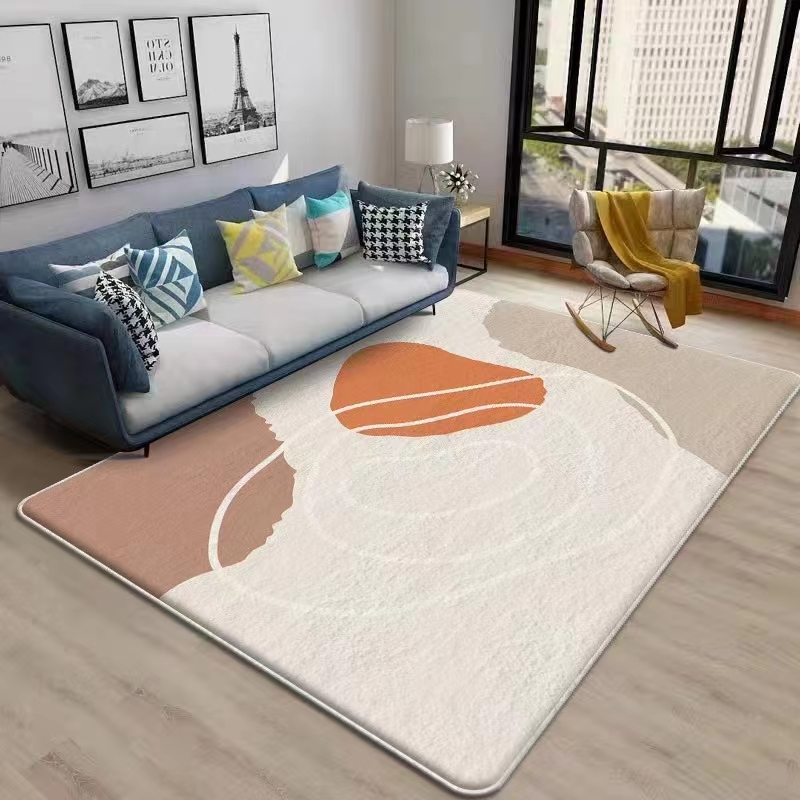
The backing material significantly influences the product's drape and floor grip. Premium faux sheepskin features a faux suede backing, which offers flexibility and mimics the feel of real animal hide. This material allows the rug to lay flat immediately after unboxing. In contrast, cheaper products use rigid canvas or exposed woven backings that feel stiff, curl at the edges, and slide easily on hard floors.
The lamination process bonds the pile to the backing using adhesives. Cheap, formaldehyde-heavy glues cause stiffness, crack over time, and emit strong fishy odors. These Volatile Organic Compounds (VOCs) create hazardous indoor air quality and guarantee customer returns. Mandate the use of high-quality, low-VOC adhesives from your supplier. You can test this by bending the sample sharply; if you hear a cracking sound, the adhesive is too brittle.
Inspect the structural differences between overlocked edges and flush-cut borders. Overlocking, or whip-stitching, wraps the edge in yarn, preventing fraying and securing the perimeter. Raw cut suede borders can look cleaner and more authentic, but they require precise die-cutting and strong adhesive bonding to prevent the pile from separating from the backing along the edge.
Examine the perimeter edges of samples for loose fibers and unanchored yarns. Improper die-cutting leaves severed fibers trapped in the seams, which shed immediately upon unboxing. A clean, secure edge is a hallmark of proper quality control on the factory floor. Run your hand vigorously along the perimeter to check for loose material.
Safety compliance requires anti-slip properties, especially for smaller accent rugs placed on hardwood or tile floors. You must evaluate the integration methods for slip resistance. Options include integrated silicone grips, non-slip backing coatings, or recommending separate rug pads to the end consumer. Integrated solutions offer a better out-of-the-box experience but increase manufacturing complexity and unit cost.
If you opt for a non-slip coating, ensure it does not degrade or become sticky over time. Poor quality silicone dots can peel off in the wash or leave residue on the customer's floor. Test the slip resistance by placing the sample on a smooth surface and applying lateral pressure. The rug should grip the floor firmly without sliding.
Retailers must compare the economics of ordering standard pelts versus commissioning a custom faux sheepskin rug for specific collections. Standard shapes like single, double, quad, or sextuple pelts offer economies of scale and faster production times. Custom dimensions provide exclusivity and allow you to fit specific room layouts, but they require custom cutting dies and higher minimum order quantities.
When ordering custom shapes, scrutinize the die-cutting precision. The edges must be symmetrical and natural-looking to maintain the organic aesthetic of a pelt. Jagged cuts or asymmetrical curves ruin the illusion of a natural hide. Request technical drawings and physical templates before approving a custom shape for mass production.
Adapting to seasonal decor trends requires custom Pantone matching. Ensure your supplier uses advanced dyeing processes that penetrate the synthetic fibers completely. Surface-level dyeing will fade quickly in sunlight. Colorfastness is non-negotiable. Require ISO testing standards for colorfastness to light, washing, and rubbing to prevent dye transfer onto the consumer's floors or furniture.
Establish clear parameters for care labeling. Determine if the product supports machine washability or requires dry-clean-only care. Machine washability is a strong marketing claim, but the backing and adhesives must withstand domestic laundering without delaminating. Specify water temperature limits and cycle restrictions on the care label to prevent consumers from destroying the rug in a hot wash.
Validating a carpet manufacturer supplier requires strict certification checks. Mandate the verification of Oeko-Tex Standard 100 and EU REACH compliance. These certifications ensure products are free from harmful azo dyes, phthalates, and heavy metals. If utilizing recycled polyester yarns, demand Global Recycled Standard (GRS) certification to verify the supply chain.
Fire safety standards are critical for importing textiles. Outline the flammability testing requirements necessary for your region, such as 16 CFR Part 1630/1631 in the US or BS 5852 in the UK. Non-compliance results in seized shipments, heavy fines, and severe legal liability. Always request current, third-party lab test reports rather than relying on factory self-declarations.
Evaluate a supplier's monthly production capacity against your peak season volume requirements. A supplier might handle sample orders perfectly but fail during Q4 scale-up. Ask for their maximum monthly output and current capacity utilization. Break down standard manufacturing lead times versus raw material sourcing delays. Securing high-quality Japanese acrylic fiber often adds weeks to the production timeline for bulk area rugs.
Factor in the time required for dyeing, tufting, backing lamination, and final inspection. A typical production run takes 30 to 45 days, but raw material shortages can push this to 60 days or more. Build buffer time into your procurement schedule to account for unexpected factory delays or power rationing in manufacturing districts.
Implement rigorous pre-shipment inspections. Set specific AQL (Acceptable Quality Limit) standards for third-party inspectors before containers are sealed. An AQL of 2.5 for major defects and 4.0 for minor defects is standard for home textiles. Classify defects clearly in your inspection manual to avoid ambiguity on the factory floor.
Vacuum-sealing bulk orders optimizes freight space and reduces shipping costs, but it risks permanent pile crushing and backing creasing. You must analyze the cost-saving benefits against potential product damage. A container can hold significantly more vacuum-packed rugs, lowering the per-unit freight cost. However, if the rugs do not recover their loft, the return rate will negate any freight savings.
Establish recovery protocols by testing how long a vacuum-sealed sample takes to regain its original loft. Determine if the end consumer will need to vigorously brush the rug post-unboxing to restore its appearance. If brushing is required, include a small care card in the packaging with clear instructions to manage customer expectations.
Accurate margin modeling requires calculating true landed costs. You must account for the FOB price, sea freight, packaging configurations, customs tariffs on synthetic textiles, and domestic warehousing. Do not rely solely on the factory's unit price. Tariffs on synthetic rugs can be substantial depending on the country of origin.
Balance premium material upgrades, like higher GSM or recycled fibers, with your target retail price ceilings. A higher initial FOB cost for a denser rug often yields better net margins by drastically reducing return rates associated with poor quality. Work closely with your freight forwarder to optimize carton sizes and maximize container utilization, ensuring you are not paying to ship empty air.
Successful procurement hinges on strict GSM minimums, superior backing materials, clean adhesives, and rigorous chemical compliance. Advancing a supplier from the initial contact phase to the sample testing phase requires verified certifications and transparent production capacities. You must control the technical specifications to protect your brand reputation.
Take these immediate actions to secure your supply chain:
A: For a premium retail feel, a minimum of 800 to 1000 GSM is ideal. This density ensures a plush, luxurious texture and prevents the backing from being visible through the fibers. Lower GSM products often look sparse and wear out quickly under normal foot traffic.
A: Perform a manual pull test by pinching a small section of the pile and pulling upward with moderate force. High-quality rugs with proper tufting and adhesive backing will release very few fibers. Excessive shedding indicates weak anchoring and predicts high customer return rates.
A: A blend is optimal. Acrylic provides the soft, crimped texture that mimics real wool, while polyester adds structural durability and cost-efficiency. An 80% acrylic and 20% polyester blend is the industry standard for balancing a premium tactile experience with long-lasting resilience.
A: A reputable supplier must provide Oeko-Tex Standard 100 and EU REACH certifications to guarantee the absence of harmful chemicals, azo dyes, and heavy metals. They must also meet regional fire safety flammability standards, such as 16 CFR Part 1630/1631 in the United States.
A: Vacuum packing crushes synthetic fibers. To restore the loft, unpack the rug immediately and vigorously shake it. Brushing the pile with a specialized wire pet brush or a stiff-bristled garment brush will separate the compressed fibers and return the rug to its original volume.
A: Synthetic textiles often face specific, elevated import tariffs depending on the country of origin and destination. You must classify the exact material composition with your customs broker to calculate accurate duties, which directly impact your final retail margin.


