
- All
- Product Name
- Product Keyword
- Product Model
- Product Summary
- Product Description
- Multi Field Search

Views: 0 Author: Site Editor Publish Time: 2026-08-21 Origin: Site


Entryways, hallways, living rooms, and dining areas face relentless wear from foot traffic, pets, and children, rapidly degrading traditional floor coverings. While the promise of "washable" is highly appealing for mess-prone areas, buyers face a saturated market with wildly varying quality and durability standards. The challenge is identifying which products actually survive heavy abrasion, pet claws, and repeated laundering without losing structural integrity, curling at the edges, or looking cheap.
Evaluating washable rugs requires looking past marketing claims and understanding the physical mechanics of textile wear. High-traffic environments demand specific material properties and construction methods to withstand daily abuse. This guide introduces a framework for evaluating material composition, construction types, cost-to-value ratios, and realistic maintenance requirements. By applying these criteria, you can select a rug that balances aesthetic expectations with commercial-grade durability.
Construction dictates longevity: Two-piece systems offer easier washing for large sizes, while one-piece designs provide a more traditional feel but require commercial washers for sizes over 8x10.
Material trade-offs are unavoidable: Synthetic, low-pile fibers resist stains and abrasion best in high-traffic zones, but often sacrifice the plush, luxurious feel of traditional textiles.
Backing degradation is the primary failure point: Repeated heat exposure during drying is the leading cause of non-slip backing failure; cold washing and air drying are non-negotiable for long-term ROI.
Washer capacity limits scalability: The physical limitations of residential washing machines dictate the maximum viable size for machine washable rugs, making foldable rugs critical for larger rooms.
Quantifying high-traffic environments requires analyzing the specific physical stressors applied to the floor covering. Constant friction breaks down surface fibers. Pivot points under heavy furniture grind particulate matter deep into the backing material. Outdoor dirt tracking introduces abrasive silica and sand, which act like sandpaper against textile threads every time someone walks across the room. Frequent liquid spills test the hydrophobic limits of the material, demanding rapid response capabilities before liquids penetrate the subfloor.
Different areas of a home subject floor coverings to entirely different types of mechanical wear. Understanding these zones helps dictate the exact specifications required for survival.
Home Zone | Primary Stressor | Mechanical Impact | Required Rug Characteristic |
|---|---|---|---|
Entryways & Mudrooms | Moisture and heavy particulate tracking | Abrasive grinding of sand/dirt; water saturation | High liquid repellency; low pile for door clearance |
Hallways | Concentrated, directional foot traffic | Fiber compression in a narrow, repeated path | High abrasion resistance; heavy drape to prevent shifting |
Dining Rooms | Chair pivot points and food spills | Twisting friction on fibers; biological staining | Stain-resistant synthetic fibers; high dimensional stability |
Living Rooms | Prolonged static weight and pet activity | Pile crushing; claw snagging | Cut-pile construction; strong edge binding |
Homes with pets and children require a distinct set of performance metrics. Biological stains, pet claws, and unpredictable daily messes demand non-toxic, easy clean carpet rugs. Traditional materials fail here because they trap odors deep within their woven cores. Claws easily snag loose loops in natural fibers, unraveling the construction. A successful high-traffic solution must resist these biological and mechanical threats while remaining safe for prolonged skin contact. Loop-pile rugs are notorious for catching cat claws, making cut-pile or flatweave constructions mandatory for pet owners.
Standard jute, wool, or high-pile synthetic rugs frequently fail in aggressive environments. Jute is highly porous and retains stains permanently; once a liquid breaches its surface, the discoloration is irreversible. Wool, while naturally resilient, sheds under heavy friction and traps odors if not professionally extracted using hot water systems. High-pile synthetics mat down quickly under constant footfalls, creating visible wear paths that cannot be revived through standard vacuuming.
To survive these environments, a purchase must meet strict baseline requirements. Colorfastness ensures dyes do not bleed during repeated wash cycles or fade under UV exposure from nearby windows. Edge-weight retention prevents the perimeter from curling upward, which creates dangerous tripping hazards. Liquid repellency buys time to wipe up spills before they penetrate the backing. Dimensional stability guarantees the rug will not shrink or warp out of square after passing through a washing machine drum.
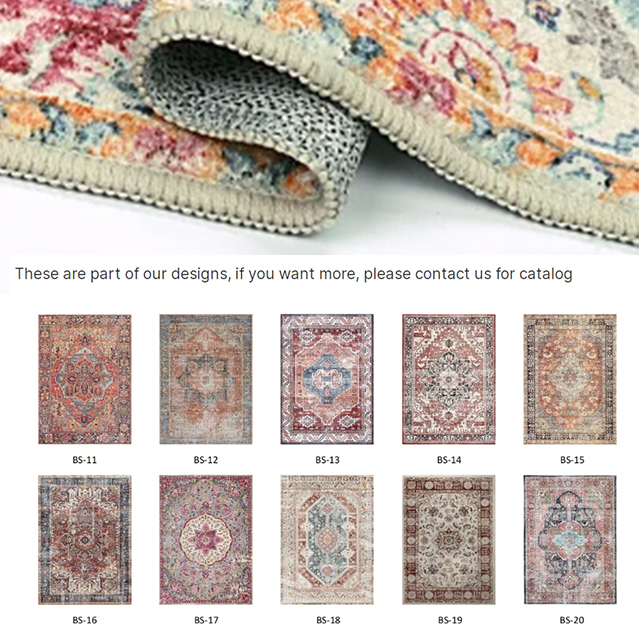
The engineering behind machine washable rugs dictates how they perform under stress and how easily they can be maintained. Buyers must choose between modular systems and integrated designs, each carrying distinct advantages and logistical challenges.
Two-piece systems utilize a hook-and-loop or silicone grip-pad mechanism to separate the decorative top layer from a cushioned base. The top cover acts as the visual surface, while the bottom pad provides structural grip and impact absorption.
For high-traffic areas, this modular approach offers significant maintenance advantages. The top layer is thin and highly flexible. This flexibility allows large sizes, such as an 8x10 cover, to fit comfortably inside standard residential washing machines. If the base pad loses its grip over years of use, it can be replaced independently without requiring a completely new purchase.
However, two-piece systems carry inherent risks. The edges of the thin cover can separate from the pad or curl over time due to foot traffic catching the perimeter. Re-aligning a large cover onto its exact footprint after washing requires significant physical effort. The overall profile is generally thinner, which may not provide the acoustic dampening or underfoot comfort expected in living spaces.
Sweep and mop the hard floor surface to ensure the base pad grips properly without trapping dust.
Roll the base pad out completely flat, ensuring no ripples or folded corners.
Roll the freshly washed top cover tightly, pattern side facing inward.
Align the exposed edge of the rolled cover with the shortest edge of the base pad, leaving a one-inch overhang.
Slowly unroll the cover across the pad, smoothing outward from the center to push air bubbles toward the edges.
One-piece designs mimic traditional rug construction but utilize a permanently attached, flexible, non-slip backing instead of rigid glue or stiff jute.
These integrated models offer a heavier drape, making them far less prone to edge curling. They lay flat immediately upon unrolling and feel closer to a traditional, substantial floor covering. The lack of a separate pad eliminates alignment struggles after laundering.
The primary drawback is weight and volume. One-piece designs become exceptionally heavy when saturated with water. Sizes larger than 6x9 often exceed the drum capacities and weight limits of standard residential washers, necessitating trips to a laundromat for commercial-grade equipment. The integrated backing is subjected to the full mechanical stress of every wash cycle, accelerating potential wear.
The physical flexibility of the backing determines whether a rug can survive a washing machine. Rollable rugs with stiff, glued backings cannot be machine washed regardless of their surface material; the agitation will crack the foundation and destroy the binding.
This logistical reality makes foldable rugs essential for machine washing. They utilize thermoplastic rubber (TPR) or silicone blends that bend without snapping. When evaluating these options, crease recovery is a critical metric. High-quality foldable designs relax and flatten within 24 to 48 hours after being stored or removed from the washing machine, without leaving permanent ridges that cause tripping.
The surface fiber composition directly dictates how washable area rugs handle abrasion, moisture, and dirt. Selecting the right material requires aligning the fiber's chemical properties with the room's specific stressors.
Synthetic fibers dominate the washable market due to their exceptional durability and pet compatibility. Polyester and polyurethane blends offer high resistance to abrasion, tearing, and snagging from pet claws. The smooth extrusion of synthetic threads leaves fewer microscopic gaps for dirt to hide compared to natural spun yarns.
These materials boast naturally hydrophobic properties. They prevent immediate liquid absorption, causing spills to bead on the surface. This allows for easy wipe-ups of daily dirt and biological spills before washing is even required. Synthetic fibers exhibit superior colorfastness. They hold dye securely within the polymer structure, ensuring the pattern remains vibrant through multiple aggressive wash cycles without fading.
Natural fiber blends, incorporating cotton or recycled organic yarns, offer a distinct aesthetic appeal. They provide a matte, organic look that closely mimics traditional flatweaves, avoiding the slight sheen sometimes associated with synthetic threads.
Deploying natural fibers in high-traffic zones carries implementation risks. Cotton is highly absorbent, meaning spills penetrate quickly and require immediate laundering. There is a significantly higher risk of shrinkage when exposed to water, often losing 3% to 5% of their total size after the first wash. Heavy foot traffic and frequent washing machine agitation cause natural fibers to degrade, pill, or fray faster than their synthetic counterparts.
The vertical height of the yarn dramatically impacts longevity. Low-pile or flatweave constructions are the optimal choice for high traffic. A lower profile reduces tripping hazards, allows standard interior doors to clear the surface without dragging, and minimizes the physical space where dirt and pet hair can become trapped.
Chenille or plush washables present a functional trade-off. While they offer a softer underfoot experience, higher piles mat down quickly under heavy traffic. The longer fibers trap debris deeply, reducing the efficacy of the washable feature since standard washing machines struggle to flush heavy particulate matter out of dense, long yarn.
Fiber Type | Stain Resistance | Abrasion Resistance | Shrinkage Risk |
|---|---|---|---|
Polyester Blend | High (Hydrophobic) | High | Low |
Polyurethane Coated | Very High | Medium | Low |
Cotton Flatweave | Low (Absorbent) | Medium | High |
Recycled Yarn Blend | Medium | Low | Medium |
Purchasing for high-traffic areas requires balancing upfront investment against expected lifespan. Buyers must navigate the compromises inherent in making a large textile safe for a washing machine.
The market exhibits a massive price disparity between premium modular systems and budget-friendly alternatives. Evaluating this cost-to-value ratio requires looking beyond the surface pattern. Premium systems invest heavily in fade-resistant inks, reinforced edge binding with higher stitch counts per inch, and advanced backing polymers that resist heat degradation. Budget options offer excellent short-term solutions for highly destructive environments, such as a mudroom, but they frequently suffer from rapid backing failure or severe color loss after the first few washes.
A common source of buyer disappointment stems from unrealistic aesthetic expectations. Washable rugs are inherently thinner than traditional hand-tufted or hand-knotted rugs. They must be thin to fold, flex, and fit into a washing machine drum while allowing water to pass through the fibers. Buyers must accept this thinner profile as a necessary compromise for the convenience of machine laundering.
Frequent washing and heavy foot traffic inevitably break down edge binding. As the binding tightens or the backing shrinks slightly relative to the top layer, the corners begin to curl upward. This differential shrinkage is a primary failure point. Evaluating solutions is critical. Some manufacturers incorporate weighted corners to maintain downward pressure. In other cases, specialized double-sided rug tapes must be applied to secure the perimeter, though this negates the ease of quickly lifting the rug for a wash.
The non-slip backing is the most vulnerable component. Thermoplastic Rubber (TPR) or silicone backings degrade over time due to oxidation, friction, and exposure to cleaning chemicals. Washable does not mean indestructible. The backing will eventually lose its grip or begin to flake, dictating the end of the product's usable life regardless of how pristine the top surface looks.
White or yellow flakes appearing on the hard floor beneath the rug.
The rug shifting easily when walked upon, indicating a loss of friction.
Hard, brittle patches forming on the underside of the rug.
Visible separation between the woven top layer and the rubberized base.
Selecting a reliable washable rug supplier is just as important as selecting the right material. Supplier transparency directly impacts your ability to maintain the product safely.
A trustworthy manufacturer clearly lists the exact weight, pile height, and specific washer-size requirements for every rug dimension they sell. Vague claims of machine washable are insufficient. You need to know exactly how many cubic feet your washing machine drum must be to handle an 8x10 model without burning out the appliance's motor.
Evaluate suppliers based on their policies regarding post-wash defects. Shrinkage, severe color bleeding, and backing separation often only reveal themselves after the first laundering cycle. A robust warranty that covers structural failure post-wash indicates the supplier has confidence in their bonding agents and material pre-shrinking processes.
For modular, two-piece systems, assess whether the supplier sells replacement covers or base pads separately. The ability to replace a stained cover while keeping the original pad, or vice versa, significantly extends the product's lifecycle and improves long-term value.
Do they provide exact washing machine capacity requirements per rug size?
Is the backing material explicitly stated (e.g., TPR, Silicone, PVC)?
Does the warranty cover delamination or edge curling after washing?
Are replacement parts available for modular systems?
Do they provide clear instructions on detergent compatibility?
Even the highest-quality materials fail if subjected to improper maintenance protocols. Understanding the physical limitations of your cleaning equipment is mandatory.
A standard 3.8 cubic foot top-load washer with a central agitator cannot handle an 8x10 one-piece rug. Forcing it in results in inadequate cleaning, severe creasing, and potential damage to the washer's transmission. The central agitator can also tear the edge binding. Large one-piece models require front-loading machines with impellers and capacities exceeding 4.5 cubic feet, or a trip to a commercial facility.
Rug Size (One-Piece) | Minimum Washer Capacity Required | Recommended Washer Type |
|---|---|---|
3x5 or Runner | 3.5 Cubic Feet | Top Load or Front Load |
5x7 | 4.2 Cubic Feet | Front Load (No Agitator) |
8x10 | 5.0+ Cubic Feet | Commercial Front Load |
9x12 | Commercial Facility Only | Commercial Front Load |
Heat is the primary enemy of synthetic backings. Heat destroys TPR backings, causes them to melt or flake, and permanently shrinks synthetic covers. Air drying on a line or using a strict no-heat air-fluff cycle in the dryer is mandatory to preserve the structural integrity of the backing and the binding.
Establish a realistic maintenance cadence. Machine washing should be reserved for deep soiling, seasonal refreshing, or major biological spills. Frequent, unnecessary machine washing accelerates fiber breakdown and backing degradation. Implement aggressive spot cleaning for minor daily spills; this extends the rug's lifespan significantly while maintaining a clean appearance.
Vacuum the rug thoroughly to remove loose particulate matter before washing.
Pre-treat heavy stains with a mild, bleach-free enzyme cleaner.
Load the rug loosely into the washer drum; do not pack it tightly.
Wash on a delicate cycle using cold water and a mild liquid detergent.
Remove immediately after the spin cycle to prevent deep creases from setting.
Hang dry over a sturdy railing or lay flat in a well-ventilated area away from direct sunlight.
Washable rugs are highly effective for high-traffic areas only if buyers align their expectations with the physical realities of the materials. Thinner profiles and strict cold-wash protocols are the trade-offs required for the convenience of machine laundering. By understanding how different fibers and backings react to friction and water, you can deploy these textiles successfully in the most demanding areas of a home.
When making a final selection, apply clear shortlisting logic. Choose two-piece systems for very large rooms, such as living or dining areas, where residential washer capacity becomes a bottleneck. Choose one-piece low-pile synthetics for entryways and hallway runners, where heavy daily abrasion requires a heavier drape to prevent tripping and edge curling.
To move forward effectively, take these immediate next steps:
Measure your target space accurately to determine the exact dimensions required for your room layout.
Check your washing machine's drum capacity in cubic feet to ensure it can handle the saturated weight of your chosen rug size.
Prioritize synthetic flatweaves over natural fibers or plush piles for your highest-traffic zones to guarantee maximum longevity.
Establish a dedicated spot-cleaning kit to handle minor spills, reserving machine washing for deep, seasonal cleaning.
A: Yes, specifically low-pile synthetic options. They resist abrasion and repel stains effectively. However, they require strict adherence to cold-wash and air-dry maintenance protocols to prevent the non-slip backing from degrading under heavy daily use.
A: Yes, particularly low-pile synthetic washable area rugs. They resist claw snagging, allow for easy cleanup of biological messes, and do not trap pet odors deep in the fibers like traditional wool or high-pile rugs.
A: Rarely for one-piece rugs; a commercial washer is usually required due to the heavy weight when wet. Two-piece cover systems in 8x10 can typically fit in standard 4.5+ cubic foot front-loading residential machines.
A: Curling is caused by heat damage in the dryer, shrinkage of the top layer relative to the backing, or the physical breakdown of the edge binding from heavy foot traffic catching the perimeter.
A: Machine washing should be limited to every few months or when heavy soiling occurs. For daily maintenance, rely on vacuuming and spot cleaning, as excessive machine washing accelerates the wear of the backing and fibers.
A: Generally, no. Bleach strips colorfast dyes from synthetic fibers and breaks down the structural integrity of the TPR or silicone backing. Always use mild, non-bleach liquid detergents to preserve the materials.


