
- All
- Product Name
- Product Keyword
- Product Model
- Product Summary
- Product Description
- Multi Field Search

Views: 0 Author: Site Editor Publish Time: 2026-08-07 Origin: Site


Selecting a uniquely shaped textile requires different spatial planning than a standard rectangular carpet. The irregular, scalloped edges of a faux sheepskin rug complicate standard room measurements and require precise planning. You cannot simply drop a tape measure across the floor and expect a perfect fit. The organic curves create visual interest, but they also demand a thoughtful approach to floor coverage.
Purchasing the incorrect dimensions results in disproportionate room aesthetics, inadequate floor coverage, potential tripping hazards, and the logistical friction of returning bulky items. A rug that is too small looks like an afterthought, floating aimlessly in the center of the room. Conversely, an oversized piece can swallow the floor plan, interfering with door swings and creating awkward overlaps with heavy furniture legs.
This guide provides a systematic framework for evaluating faux sheepskin rug sizes, translating standard pelt configurations into accurate floor plans, and matching dimensions to specific room layouts and furniture footprints.
Pelt Configurations Dictate Dimensions: Faux sheepskin sizes are typically categorized by "pelt" equivalents (single, double, quarto, sexto, octo, decimo), which determine both the overall square footage and the length-to-width ratio.
The Rule of Proportions: A living room area rug should anchor the primary furniture grouping, requiring at least the front legs of major seating to rest on the pile, whereas accent sizing requires 12 to 18 inches of negative space from walls.
The Layering Equation: Layering a smaller faux sheepskin over a larger, low-pile base rug (like jute or sisal) is an effective design strategy that bypasses the limitations of standard rectangular configurations.
Clearance is Critical: Factoring in pile height and density (measured in GSM) against door swings and high-traffic pathways is a mandatory step before finalizing dimensions.
Customization for Non-Standard Spaces: When standard multi-pelt configurations fail to align with unique architectural features, custom rug sizes offer a scalable solution without compromising the organic, natural-edge aesthetic.
Manufacturers measure irregular shapes differently than traditional broadloom carpets. When you look at the listed dimensions for a faux sheepskin rug, those numbers represent the absolute widest and longest points across the tips of the fibers. The actual usable floor coverage is smaller. The backing itself sits several inches inside the fiber perimeter.
This variance means a 4x6 natural-edge rug will cover significantly less floor space than a standard 4x6 rectangular rug. The deep scallops and curved corners carve out negative space. You must account for this lost square footage when planning your room layout, often sizing up to achieve the desired visual weight. If you plan to place a coffee table on top, you need to ensure the table legs hit the solid backing, not just the overhanging fibers.
Faux sheepskin dimensions follow traditional pelt configurations. Understanding these equivalents helps you visualize the shape and scale before unrolling the product on your floor.
Pelt Configuration | Approximate Dimensions | Best Room Application |
|---|---|---|
Single Pelt | 2ft x 3ft (60cm x 90cm) | Accent chairs, bench drapes, bedside steps |
Double Pelt | 2ft x 6ft (60cm x 180cm) | Hallway runners, foot of a bed, bench seating |
Quarto (4-Pelt) | 4ft x 6ft (120cm x 180cm) | Small living areas, study accents, nursery play zones |
Sexto (6-Pelt) | 5.5ft x 6ft (170cm x 180cm) | Mid-sized furniture groups, under twin/full beds |
Octo (8-Pelt) | 6ft x 8ft (180cm x 240cm) | Standard living spaces, under queen/king beds |
Decimo (10-Pelt) | 6.5ft x 9ft (200cm x 275cm) | Grand living areas, master bedroom suites |
Weight directly impacts how large a rug feels in a room. Manufacturers measure this in Grams per Square Meter (GSM), which typically ranges from 800 to over 1500 GSM for high-quality faux options. A higher GSM indicates a denser, thicker pile.
A dense, high-pile rug visually occupies more space. It creates vertical volume that draws the eye. A 1500 GSM quarto pelt will look much more substantial than an 800 GSM flatweave of the exact same dimensions. When dealing with thick fibers, the rug commands more attention, meaning you might need slightly less square footage to make a strong design impact. Conversely, a thin, low-GSM rug might look lost in a large room even if the length and width measurements are technically correct.
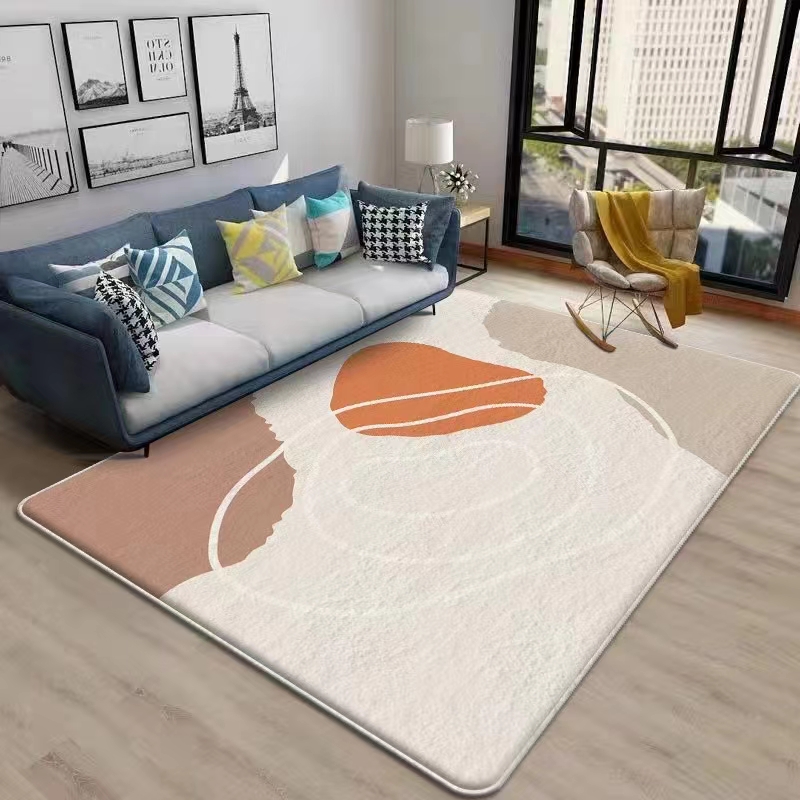
Never guess your measurements. Use painter's tape to outline the potential dimensions directly on your floor. This physical representation helps you verify spatial flow and furniture alignment. Follow these steps for accurate taping:
Clear the floor space completely of small obstacles and debris.
Mark the maximum length and width using four small pieces of tape to create a bounding box.
Run continuous strips of tape to connect the corners, forming a rectangle.
Use smaller, 3-inch pieces of tape inside the rectangle to mimic the scalloped indentations of the natural edge.
Place your primary furniture pieces back into the space to see where the legs land relative to the taped boundary.
Remember that the listed dimensions reflect the fiber tips, not the backing. Your tape outline represents the absolute outer boundary of the fluff, so ensure your furniture legs will actually reach the solid backing material inside that perimeter.
Layering solves many sizing dilemmas. Pairing a highly textured faux sheepskin with a larger base carpet adds depth and allows you to use smaller pelt configurations effectively. You might place a single or double pelt over a 5x8, 8x10, or 9x12 jute, sisal, or low-pile wool rug.
Proportion is key here. The top layer should cover no more than 30 to 50 percent of the base rug’s surface area. If the top rug is too large, it looks like a mistake rather than a deliberate design choice. The base rug provides the structural anchor for the room, while the top layer acts as a tactile accent. For example, a double pelt runner looks excellent angled across the corner of a large 9x12 sisal rug under a reading chair.
Negative space frames your textiles. The 18-inch rule is a standard guideline: aim to maintain consistent bare floor space between the rug edge and the baseboards. This border prevents the room from feeling cramped.
Evaluate the ratio of the rug to the primary furniture piece. If you place a rug under a sofa or bed, it should extend at least 18 to 24 inches beyond the sides of the furniture. If the rug stops flush with the edge of the sofa, the proportions will look visually stunted. The rug needs to frame the furniture, not just sit underneath it.
Identify primary and secondary walkways before finalizing your size. Irregular edges should not encroach on high-traffic paths. If people constantly walk across the very edge of the scallops, the fibers will wear unevenly and the backing may curl, creating a tripping hazard.
Keep the main walking paths clear. If a 6-pelt rug pushes into the hallway traffic lane, downsize to a 4-pelt or shift the entire furniture arrangement to accommodate the larger footprint safely. You want people walking fully on the rug or fully off it, not catching the edge with their shoes.
The living room demands careful proportioning. A living room area rug must anchor the seating arrangement without overwhelming the floor plan. You have three primary layout options depending on the size of your space and your furniture.
Full Anchor Setup: Sizing requirements for an 8-pelt (Octo), 10-pelt (Decimo), or larger configuration dictate that it sits entirely under the sofa, coffee table, and accent chairs. This unifies a large, open-concept space and requires a massive footprint.
Front-Legs-Only Setup: Utilizing a 4-pelt (Quarto) or 6-pelt (Sexto) configuration bridges the gap between seating arrangements. The front legs of the sofa and chairs rest on the pile, while the back legs remain on the bare floor. This is the most common and practical application.
Floating Accent Setup: Using a single or double side-by-side pelt strictly under a central coffee table or in front of an accent fireplace. This works well in smaller rooms where a massive rug would feel suffocating.
A bedroom rug provides a soft landing zone in the morning. Placement depends heavily on the bed size and room layout. You want the texture exactly where your feet hit the floor.
Under-Bed Placement (Queen & King Beds): Calculate dimensions for a large 8-pelt or 10-pelt rug to extend 24-36 inches on the sides and foot of the bed. The nightstands can either sit entirely on the rug or completely off it.
Under-Bed Placement (Twin & Full Beds): Utilize a 4-pelt (Quarto) or 6-pelt (Sexto) running horizontally under the lower two-thirds of the mattress.
Bedside Runners: Place single or double end-to-end pelts on either side of the bed. This is a cost-effective way to get the tactile benefit without buying a massive room-sized piece.
Foot-of-Bed Accents: Size a horizontal multi-pelt configuration to complement an end-of-bed bench or trunk.
These spaces benefit greatly from high-pile textures, but safety and scale remain paramount. You need enough coverage for floor activities without creating a tripping hazard for toddlers.
Tummy Time Zones: Size a Quarto (4-pelt) rug to provide a soft, plush, and safe play boundary for infants. Ensure the backing is securely gripped to the floor with a high-quality pad.
Reading Nooks: Use a single pelt or double pelt draped over a glider chair or positioned directly beneath a small bookcase. This defines the cozy corner without requiring a massive footprint.
Some rooms present distinct challenges for high-pile, irregular textiles. You must evaluate the functional mechanics of the room before committing to a thick faux sheepskin.
For office chairs, high-pile fibers are generally incompatible with rolling casters. The wheels will crush the pile, get tangled in the fibers, and eventually ruin the rug. Instead, size single pelts for static reading nooks or guest chairs within the office, keeping the desk area clear for a low-pile or hard surface.
Dining rooms have strict measurement rules. A rug must extend a minimum of 24-36 inches beyond the table edge so chairs remain on the pile when pulled out. The practical limitations of thick fibers in spill-prone zones, combined with the difficulty of moving chairs over deep pile, make faux sheepskin an unfavorable choice for entire dining sets. If you must use one in a dining area, restrict it to a small accent piece away from the main table.
Sometimes, the standard pelt multiples simply do not work. You may encounter architectural anomalies like bay windows, asymmetrical rooms, narrow hallways, or massive open-concept floor plans that defy standard geometry.
If a 6-pelt is too small but an 8-pelt blocks a floor vent, standard sizing fails. In these scenarios, forcing a pre-made size compromises the room's functionality and aesthetic balance. You end up with a rug that looks awkwardly shoved into a corner or one that leaves too much bare floor exposed.
Manufacturers can seam faux pelts together to achieve exact dimensions or non-standard shapes. Custom rug sizes allow for extra-long runners, circular designs, or L-shaped configurations that navigate tricky floor plans.
Consider the logistics of custom orders. They require longer lead times, specific shipping considerations for oversized packages, and are typically subject to strict non-returnable policies. Measure three times before submitting a custom order. The aesthetic and functional payoff of a perfectly scaled room often justifies the extra effort, provided your measurements are flawless.
Thick pile creates vertical obstacles. Measure the gap between the bottom of your doors and the floor. The combined height of the pile and the backing must not obstruct the door swing.
If a door drags across the fibers, it will ruin the rug and damage the door hinges over time. If clearance is tight, you must position the rug outside the door's arc entirely. Use a rigid tape measure to check the clearance at multiple points along the door's path, as floors are rarely perfectly level.
The underside of the rug matters just as much as the top. Evaluate backing options carefully. Genuine suede lookalikes, micro-suede, and polyester canvas offer durability but little grip. Non-slip synthetic backings provide better traction.
Regardless of the backing, properly sized, non-slip rug pads are necessary. They prevent slipping and protect hardwood finishes from scratching. To fit a pad to an irregular shape, lay the rug upside down on the pad, trace a line two inches inside the perimeter, and cut the pad with heavy shears. This keeps the pad hidden while providing full support.
Large-scale configurations (quarto, sexto, octo, and decimo) require significant maintenance. Washing, brushing, and drying an 8-pelt rug is a major undertaking compared to tossing a single pelt in a residential washing machine.
Oversized dimensions often exceed the capacity of home appliances. Factor in commercial laundering requirements when selecting a massive floor covering. Regular brushing with a wire slicker brush is mandatory to keep the high-traffic areas from matting down. If you cannot commit to brushing a 10-pelt rug, downsize to a more manageable dimension.
Measure your target space using the painter's tape method to visualize the exact footprint and account for scalloped edges.
Check all door clearances and primary walkways to ensure the pile height will not create obstructions or tripping hazards.
Select a standard pelt configuration that allows your primary furniture legs to rest securely on the rug's backing.
Order a custom size if your room features asymmetrical architecture or requires specific runner lengths that standard pelts cannot accommodate.
Purchase and trim a high-quality non-slip rug pad to match the irregular shape of your final selection.
A: Manufacturers take measurements from the absolute widest and longest points on the fleece side. This means the actual backing and the usable floor coverage are slightly smaller than the listed dimensions.
A: A 4-pelt, 6-pelt, or 8-pelt configuration is typically required to function as a primary living room anchor. The exact size depends on your sofa dimensions and whether you want all furniture legs on the rug.
A: Yes. For Queen and King beds, an 8-pelt or 10-pelt size works best, extending 24 to 36 inches beyond the sides and foot of the bed for a soft landing area.
A: Use a high-quality, non-slip rug pad. Cut the pad about two inches smaller than the rug's perimeter so it remains hidden under the scalloped edges while providing grip.
A: Yes, many manufacturers can seam multiple pelts together to create custom dimensions, extra-long runners, or unique shapes to fit specific architectural layouts.
A: It might. Always measure the clearance between the bottom of your door and the floor. High-pile rugs often require placement outside the door's swing arc to prevent dragging.


