
- All
- Product Name
- Product Keyword
- Product Model
- Product Summary
- Product Description
- Multi Field Search

Views: 0 Author: Site Editor Publish Time: 2026-08-11 Origin: Site


Sourcing a rug that perfectly aligns with a room’s spatial geometry, color palette, and traffic demands is a common bottleneck in interior design and procurement. Buyers frequently face a difficult trade-off: compromise on room layout and design cohesion to accommodate standard dimensions, or absorb the extended lead times and premium pricing associated with bespoke manufacturing. Floor plans rarely conform to standard dimensions, and architectural elements like bay windows, floor outlets, and asymmetrical walls complicate installation. When you force a standard size into a non-standard space, you disrupt traffic flow and compromise the intended aesthetic. This guide provides a technical evaluation framework to weigh upfront costs, spatial requirements, and lifecycle value. By analyzing structural integrity, fiber resilience, and logistical realities, buyers can determine whether a custom or off-the-shelf solution is the most viable investment for their specific project.
Spatial Dictation: Ready made rugs force the room to adapt to fixed dimensions, whereas custom rugs are engineered to fit non-standard floor plans and unique architectural features.
Cost vs. Value: While off-the-shelf options offer lower initial price points, custom solutions often yield higher long-term value through superior material specification, exact traffic-pattern matching, and heirloom-quality craftsmanship.
Lead Time Realities: The primary trade-off for total design freedom is production time; custom orders require strategic project timeline management compared to the immediate availability of standard inventory.
Sourcing Transparency: Partnering directly with a reputable rug manufacturer mitigates risks related to material quality, ethical production, and color matching.
Industry-standard dimensions dominate the retail market. Sizes like 8x10, 9x12, or 10x14 are manufactured to fit conventional, symmetrical rooms. However, these dimensions frequently fail in modern architecture. Open-concept layouts lack defined boundaries, requiring floor coverings to act as visual anchors that delineate specific zones. Asymmetrical rooms feature odd angles that standard rectangles cannot accommodate. Spaces with heavy built-in cabinetry restrict available floor area, creating narrow corridors that standard sizes simply will not fit.
This limitation creates significant design friction. You end up making the room fit the rug rather than the other way around. A standard 8x10 rug placed in a 15x20 living room leaves disproportionate borders. Industry guidelines generally dictate an 18-inch border of exposed flooring around the perimeter of a room. When you use a pre-sized rug, you often end up with 36 inches of bare floor on one side and 12 inches on the other. This forces you to push furniture against the walls, creating a dead zone in the center of the room and disrupting intended traffic flow.
Improper sizing leads to severe aesthetic and functional consequences. The "floating rug" effect occurs when a rug sits entirely disconnected from the furniture, making the room look like a temporary staging area. Improper furniture-to-rug ratios make a space feel disjointed. If a dining room rug is too small, chairs will catch on the bound edge when pulled out, causing a tripping hazard and accelerating wear on the rug's binding. These issues degrade the daily user experience and shorten the lifespan of the materials.
Every room presents a unique environmental profile that dictates material selection. You must evaluate the subfloor before selecting a rug. Hardwood floors require breathable backings to prevent moisture trapping and finish discoloration. Concrete subfloors in basements or ground-level spaces transmit cold and dampness, necessitating synthetic secondary backings that resist mildew and rot. Placing the wrong backing on a sensitive subfloor causes permanent damage to the property.
Door clearances present another physical constraint that buyers often overlook. A plush, high-pile rug might look luxurious, but if an inward-swinging door only has a half-inch clearance, the rug will bunch and bind every time the door opens. You must measure the gap between the door bottom and the floor finish, factoring in the combined thickness of both the rug and its required non-slip pad. If the clearance is tight, you are restricted to flat-weave or low-pile constructions.
Traffic patterns directly dictate fiber choice and pile density. Hallways and entryways act as funnels, concentrating foot traffic into narrow bands. These areas require dense, low-pile construction to resist crushing and matting. Direct sunlight demands high colorfastness to prevent fading, meaning solution-dyed synthetics or heavily treated natural fibers are required near large windows. You must establish these baseline success criteria—exact dimensional tolerance, colorfastness requirements, and maintenance expectations—before making any purchasing decisions.
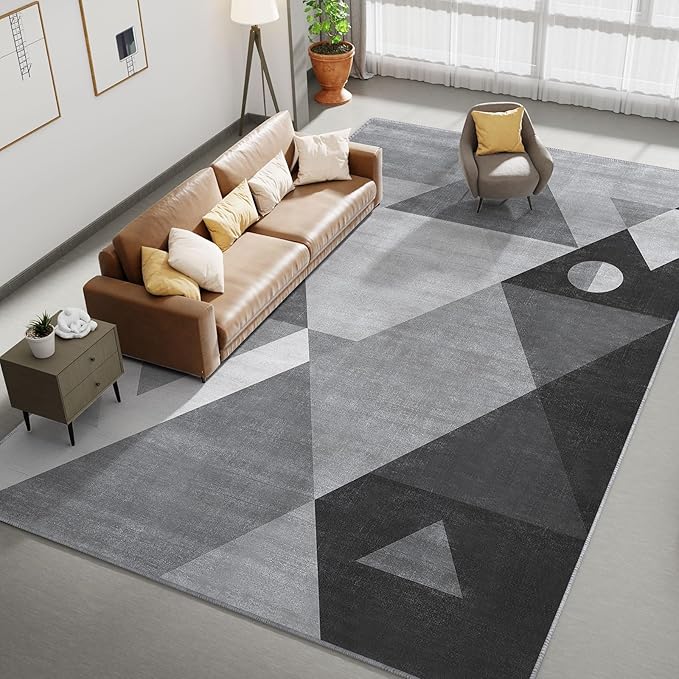
Off-the-shelf purchasing offers distinct logistical benefits for fast-paced projects. Procurement managers and designers often operate under strict, immediate deadlines. You might need to stage a property for an open house by the weekend. You might have an impending corporate event that requires immediate floor covering. In these scenarios, ready made rugs eliminate production wait times entirely. You can source, purchase, and install them within a matter of days, keeping the project schedule intact.
This route also provides highly predictable procurement. Upfront costs are fixed, transparent, and easy to budget. You avoid the variable pricing, design fees, and shipping fluctuations associated with custom design work. Furthermore, you can physically inspect the final product prior to purchase. You can feel the texture of the pile, test the density with your fingers, and verify the exact color under actual store lighting. This physical verification removes the guesswork and anxiety from the buying process.
Certain environments demand pragmatic, disposable solutions. Homes with young children experience frequent spills, stains, and heavy abrasion. Heavy-shedding pets introduce constant wear and require aggressive vacuuming that degrades natural fibers. High-spill commercial zones, such as restaurant waiting areas or hotel lobbies, face daily abuse from foot traffic and rolling luggage. In these scenarios, off-the-shelf options become the strategic choice.
The financial logic here is straightforward and practical. You utilize affordable, easily replaceable rugs because rapid degradation is inevitable. It occurs regardless of material quality. Investing heavily in a bespoke, hand-knotted silk piece for a high-attrition zone yields a terrible return on investment. Replacing a standard, machine-made synthetic rug every two to three years makes better financial sense and keeps the space looking fresh without catastrophic replacement costs.
Mass-market options rely heavily on synthetic blends to keep costs low. Manufacturers predominantly use polypropylene, polyester, and nylon. They utilize high-speed machine-made construction techniques. These methods prioritize speed and cost reduction over structural integrity. The resulting product lacks the density, resilience, and organic feel of natural fibers. The backings are often glued rather than woven, leading to delamination over time.
You must analyze the lifecycle cost of these materials. Lower-quality synthetic fibers degrade faster under friction. Polypropylene crushes under heavy furniture and rarely recovers its original shape. Polyester melts under high friction and traps oil-based dirt deep within the pile, making it look dingy even after professional cleaning. This faster degradation offsets the initial savings. Over a 10-year horizon, you may replace a standard rug three or four times, dealing with the hassle of disposal and re-installation each time.
Architectural anomalies require tailored, engineered solutions. Curved walls disrupt rectangular layouts, leaving awkward gaps. Floor outlets demand precise cut-outs to remain accessible without creating tripping hazards. Fireplace hearths and bay windows create irregular footprints that standard rectangles cannot navigate. Specifying a custom area carpet allows you to navigate these challenges seamlessly. You engineer the rug to the exact contours of the room, using physical templates to ensure a perfect fit.
The visual impact of a perfectly sized rug is profound. A rug scaled precisely to the millimeter elevates the entire space, making it look intentionally designed rather than hastily assembled. It perfectly frames the seating arrangement, ensuring all furniture legs rest securely on the pile. It eliminates awkward borders and uneven floor exposure. This level of dimensional accuracy transforms a room, providing acoustic dampening exactly where it is needed and protecting the subfloor in high-traffic zones.
Custom manufacturing offers diverse construction techniques tailored to specific performance requirements. Hand-knotted rugs provide unmatched durability, utilizing individual knots tied to a foundation, creating an heirloom-quality piece that can withstand decades of use. Hand-tufted options offer a faster production cycle while maintaining a plush, dense feel, utilizing a canvas backing and latex glue to secure the yarns. Flat-weave construction suits minimalist designs and high-traffic areas where door clearance is an issue.
Fiber choice is equally critical and entirely under your control. New Zealand wool offers superior resilience, natural stain resistance, and excellent dye retention. Silk provides a luxurious sheen and incredibly fine detail for low-traffic areas like formal bedrooms. Bamboo viscose mimics the look of silk at a lower price point, though it requires careful maintenance. Natural jute or sisal adds organic texture and extreme durability. You evaluate and select these fibers based on your specific durability needs, texture preferences, and maintenance capabilities.
Bespoke manufacturing unlocks total design freedom. You are not limited to the colors currently trending in retail showrooms. You can match exact Pantone colors to coordinate flawlessly with existing upholstery, wall coverings, or corporate branding. You can integrate proprietary patterns or scale existing motifs to fit the room's proportions without distortion. Standard rugs often distort or crop patterns awkwardly when scaled up or down. Custom engineering prevents this visual degradation, ensuring the border and field remain perfectly proportioned.
This process allows you to translate unique concepts into physical reality. You can adapt original artwork into a woven masterpiece for a lobby. You can subtly integrate corporate logos into a reception area without it looking like a cheap promotional mat. You can weave specific family heritage motifs into the design for a residential dining room. These personalized rugs add unique personality and warmth to a space. They function as foundational design elements that dictate the room's palette, rather than mere accessories added as an afterthought.
Pricing models differ drastically between the two categories. Standard rugs utilize flat-rate pricing based on fixed dimensions. You pay a set amount for an 8x10, regardless of the specific application. Custom options utilize per-square-foot pricing. This rate fluctuates based on material selection, knot count (density), and design complexity. The initial outlay for bespoke work is undeniably higher, requiring a larger upfront budget allocation.
However, you must evaluate the amortization of this investment over the property's lifespan. A high-quality custom rug, particularly one made of wool and hand-knotted, lasts 15 to 30 years with proper maintenance. It maintains its structural integrity, resists pile crush, and holds its color depth. Conversely, you will likely replace a machine-made synthetic rug every 3 to 5 years as the backing delaminates or the fibers mat down. When amortized over two decades, the bespoke option often presents a superior lifecycle value, eliminating the recurring costs of replacement and disposal.
Time is a critical factor in any installation project. Standard rugs offer immediate to 7-day fulfillment. You order it, it ships from a domestic warehouse, and it arrives ready to unroll. Custom orders follow a vastly different, highly structured trajectory. They require an 8 to 20-week production cycle, depending on the weaving technique and origin country. This timeline demands rigorous project management, early specification, and clear client expectation setting.
The critical path for bespoke orders involves multiple distinct stages. First, you finalize the digital design and color mapping. Next comes strike-off production, where the manufacturer weaves a small physical sample. Upon your approval of the strike-off, full weaving begins on the loom. Finally, the rug undergoes washing, shearing, edge binding, and international shipping. Each step adds time but ensures absolute precision in the final product.
Evaluation Metric | Ready-Made Rugs | Custom Rugs |
|---|---|---|
Dimensional Fit | Fixed standard sizes (e.g., 8x10, 9x12). Leaves uneven borders. | Exact millimeter precision. Accommodates architectural anomalies and cut-outs. |
Lead Time | Immediate to 7 days. Ships from existing inventory. | 8 to 20 weeks. Requires strike-off approval and loom scheduling. |
Lifecycle Value | 3 to 5 years. Prone to backing delamination and fiber crush. | 15 to 30+ years. High structural integrity and repairable bindings. |
Design Control | Limited to available retail inventory and current trends. | Total freedom. Pantone matching, custom motifs, and exact scaling. |
Material Quality | Predominantly synthetic blends (polypropylene, nylon). | Premium natural fibers (New Zealand wool, silk, jute). |
Technical metrics reveal stark differences in structural quality. Knot count, measured in Knots Per Square Inch (KPSI), dictates the resolution of the pattern and the durability of the rug. Bespoke handmade pieces feature high KPSI, resulting in crisp designs and superior pile density that resists crushing under heavy furniture. Their edge binding is hand-sewn (serged) using the same yarn as the field, ensuring maximum longevity and a seamless look. Mass-produced alternatives use glued binding tape or loose machine serging that easily unravels.
Craftsmanship holds intrinsic value that machines cannot replicate. Hand-woven techniques yield superior structural integrity because the knots lock the face fibers securely to the foundation warp and weft. This process creates a distinct, organic character. Machine-made counterparts appear uniform, rigid, and often have a stiff, inflexible backing that scratches hardwood floors. They cannot replicate the subtle, beautiful variations in dye lots (abrash) found in a hand-crafted piece.
Extended production cycles introduce significant schedule risks to any build or renovation. Delays in weaving, customs holds during international shipping, or finishing errors can stall an entire installation. You must build buffer timelines into your project schedules. Never schedule a final installation or a grand opening on the exact estimated delivery date of a custom rug. Establish clear communication cadences with your supplier, requesting bi-weekly photographic updates on the weaving progress to monitor the timeline accurately.
Discrepancies between digital renderings and physical outcomes pose a major risk. A color on a backlit computer screen rarely matches dyed wool exactly. You must mitigate this risk before full production begins on the loom. Mandate physical strike-offs for every custom order. These are small woven samples (usually 18x18 inches) of your specific design. Review this strike-off on-site, under the actual lighting conditions of the destination room, alongside your paint and upholstery swatches. Approve it only when you are completely satisfied with the color yield and texture.
Your project's success relies heavily on the competence of your production partner. You must rigorously evaluate a rug manufacturer before committing funds or approving designs. Use the following criteria to vet potential partners:
Review their portfolio of past commercial and residential work to verify their capability with complex patterns.
Demand transparency in their sourcing practices and look for certifications like GoodWeave, which indicate ethical, child-labor-free production.
Request physical samples of their standard binding and serging techniques to evaluate structural quality.
Establish clear, written return and remake policies for any production errors or dimensional deviations before placing the deposit.
Ready-made options serve a distinct, practical purpose in the procurement landscape. They are highly suitable for temporary staging setups, high-attrition environments, strict budget constraints, and perfectly symmetrical standard room dimensions. However, custom rugs remain the necessary choice for high-end residential projects, luxury commercial spaces, and any room where standard dimensions force unacceptable design compromises. The ability to dictate exact sizing, material composition, and color matching ensures the floor covering enhances the architecture rather than fighting it.
Apply clear shortlisting logic to your next project. If your timeline is under 4 weeks, or the spill-risk is exceptionally high, default to ready-made inventory. If the space requires floor box cut-outs, exact Pantone color matching, brand integration, or dimensions outside standard ratios, initiate a bespoke order immediately to accommodate the lead time.
Take the following steps to move your project forward:
Measure your space precisely, noting all architectural anomalies, floor outlets, door swing clearances, and furniture placement requirements.
Define your material requirements based on the room's specific foot traffic density, subfloor type, and UV light exposure.
Determine your exact project timeline to verify if an 8-to-20-week production cycle is feasible for your installation date.
Request a consultation and order a physical strike-off from a verified manufacturer to validate color, texture, and pile density on-site.
A: Custom options utilize a price-per-square-foot model that varies significantly based on material choice, knot count, and construction method. Hand-knotted silk costs substantially more than hand-tufted wool. While the initial upfront investment is higher than flat-rate standard rugs, bespoke pieces offer superior longevity. You are investing in exact dimensional fit, premium materials, and heirloom quality that outlasts machine-made alternatives.
A: A standard bespoke order requires an 8 to 20-week timeline. This cycle includes several critical phases. First, you finalize and approve the digital design. Next, the manufacturer produces and ships a physical strike-off for your approval. Finally, the actual weaving, washing, finishing, and international shipping take place. Complex patterns or massive dimensions push this timeline toward the 20-week mark.
A: Yes. Bespoke manufacturing allows for complete geometric freedom. You can specify circles, ovals, L-shapes, or entirely asymmetrical footprints. Manufacturers can also engineer specific architectural cut-outs. This flexibility allows the rug to perfectly accommodate floor outlets, fireplace hearths, curved walls, and unique room perimeters without awkward folding or cutting on-site.
A: A strike-off is a physical, scaled-down sample of your rug. The manufacturer weaves this small section using the exact colors, materials, and techniques specified in your order. You use it to verify color accuracy, pattern scale, and material texture under your room's actual lighting conditions before full production starts on the loom.
A: No. Custom designs can be executed using various construction techniques based on your requirements. While hand-knotting offers the highest durability and detail, you can choose hand-tufted or hand-loomed methods for faster production and lower costs. Commercial-grade printed options are also available for high-traffic hospitality environments. Your choice depends entirely on your project timeline and application.
A: Evaluate your furniture placement and wall borders. A standard rule dictates that all major furniture legs should rest on the rug, and the border of exposed flooring should remain consistent (usually 12 to 18 inches) around the room's perimeter. If standard sizes force you to break these rules, leave uneven borders, or ignore architectural features, your room requires a bespoke size.


